.svg)

The Most Transparent AI Tools of 2026 (Ranked by Transparency Score)
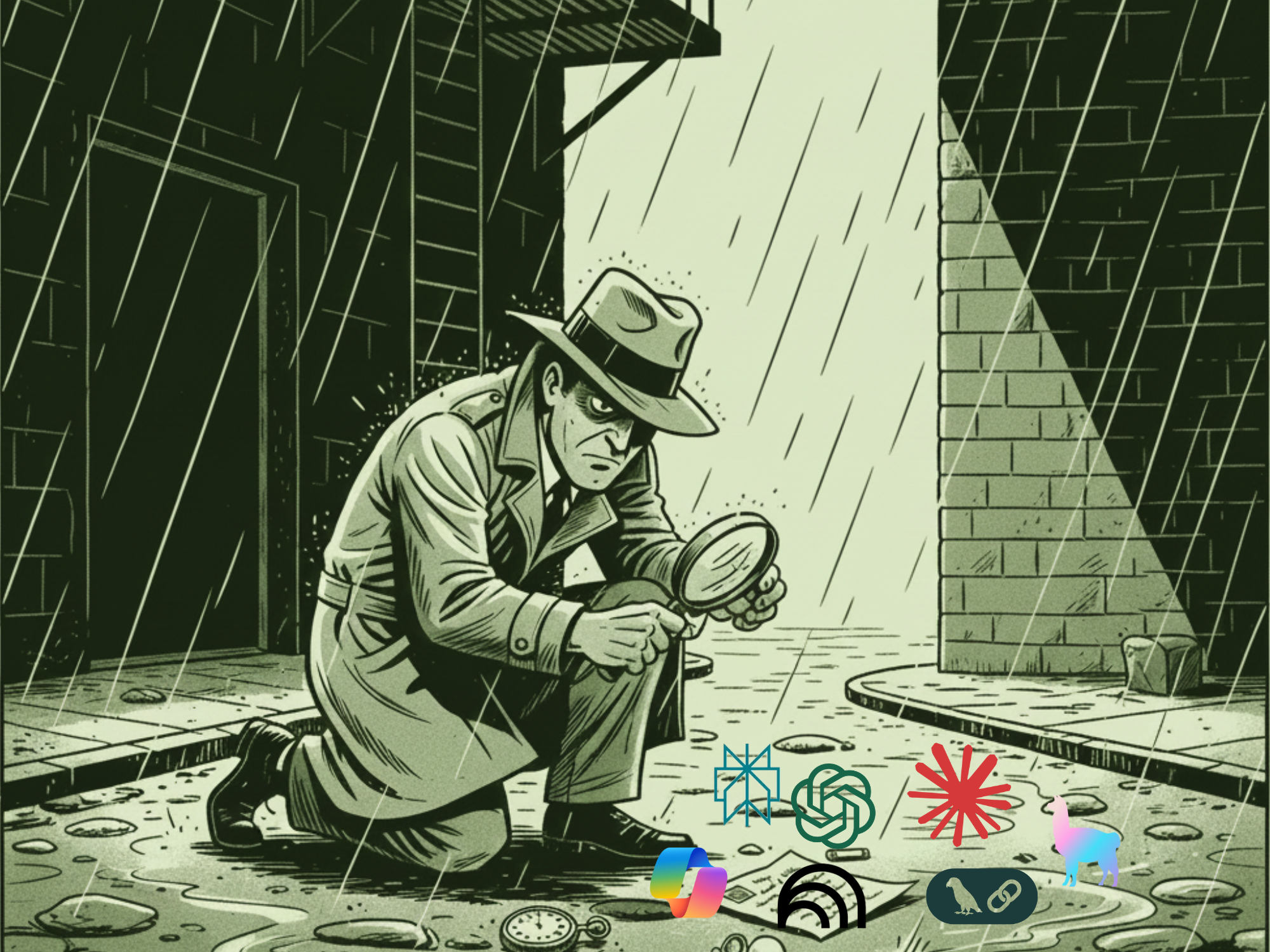
Which AI tools actually show their work, and which ones keep their magic tricks behind the curtain?
AI has never been more powerful, but let’s be honest: a lot of it still feels like you’re talking to a genius who refuses to explain how they got the answer. A black box that cheerfully says, “Trust me,” while hallucinating citations like a caffeinated grad student the night before finals.
But transparency is finally becoming a competitive advantage. Researchers, enterprises, regulators, and everyday users want the same thing:
Show me the sources. Tell me what you used. Prove you didn’t make it up.
So we tested today's leading AI tools for default transparency:
- Do they cite sources without being asked?
- Do they show retrieved documents or context?
- Can you trace an answer back to its origin?
- Do they keep your data separate from model training?
- Do they make it easy to audit, govern, or explain output?
Below is the definitive ranking—complete with Transparency Scores (0–100).
Top 7 Most Transparent AI Tools in 2026
1. NotebookLM — The Current Gold Standard for Transparent AI
Transparency Score: 95/100
Google’s NotebookLM is effectively the teacher who forces you to show your work and then neatly color-codes the rubric. It grounds every answer in user-supplied sources and highlights exactly where each fact came from.
Why it scores so high:
- Everything is document-based. No mystery data.
- Sentence-level citations with inline callouts.
- Clear, visual breakdown of what source lines were used.
- Zero hallucinated external knowledge—unless you add it.
Where it loses points:
Limited flexibility for enterprise governance, multi-user workspaces, or workflows beyond analysis/summarization.
2. Implicit — The Most Transparent AI Platform Built for Work
Transparency Score: 93/100
Implicit takes the NotebookLM philosophy and makes it enterprise-grade: private workspaces, multi-source ingestion, explainable retrieval, and automatic citations in every output. Transparency isn't a feature—it’s the core mechanics.
Why it ranks so highly:
- Answers always show citations and linked source snippets without prompting.
- Supports many content types (Drive, SharePoint, URLs, YouTube, APIs).
- Retrieval chain is inspectable—what was pulled, why, and from which doc.
- Transparent by design for audits, compliance, and regulated environments.
Where it loses points:
Doesn’t attempt to replace a general-purpose assistant (by design). Transparency is perfect; breadth of general knowledge is intentionally constrained to uploaded/connected content.
3. Perplexity AI — The Search Engine That Actually Cites Things
Transparency Score: 88/100
Perplexity is one of the only general-purpose AI tools where citations aren’t an optional side quest—they’re the default experience. Every response includes clickable sources and retrieval context.
Why it scores high:
- Automatically cites everything it references.
- Shows retrieved links and ranking order.
- Pro and Enterprise modes add more grounding and guardrails.
Where it loses points:
Sometimes blends retrieval with model intuition, and the boundary isn't always obvious.
4. LlamaIndex — Transparency for Developers Who Need Receipts
Transparency Score: 85/100
A darling of the technical world, LlamaIndex offers deep observability and pipeline-level transparency. This is the kit you give a developer who needs every answer to be audit-proof.
Why it scores high:
- Full traceability: chunk retrieval, ranking, scoring.
- Visual debugging tools that show what the model saw.
- Transparent RAG pipelines for enterprise apps.
Where it loses points:
Not a user-facing tool. Transparency depends on how developers configure it.
5. Anthropic Claude (Projects) — Honest-by-Nature, Transparent-by-Structure
Transparency Score: 80/100
Claude is already the most candid model ("I may be mistaken…" is practically its catchphrase). When you place documents into a Claude Project, answers become grounded—often with references to specific passages.
Why it scores well:
- Uses document grounding when available.
- Extremely good at acknowledging uncertainty.
- Internal research focus on mechanistic interpretability.
Where it loses points:
Doesn’t automatically cite passages from your docs unless prompted or unless the answer naturally lends itself to doing so. Less deterministic than NotebookLM or Implicit.
6. Kagi Universal Summarizer — The No-Nonsense Fact Purist
Transparency Score: 78/100
A minimalist’s dream: it summarizes content with extreme fidelity and always references exact parts of the source.
Why it scores well:
- Grounded to the document — full stop.
- Clear references to sections/lines in the original text.
- Very low hallucination rate.
Where it loses points:
It’s a summarizer, not a conversational or generative AI. Transparency is excellent, but use cases are narrow.
7. LangChain (with Observability Enabled) — The Transparency Toolkit
Transparency Score: 74/100
This is similar to LlamaIndex: powerful, flexible, and traceable when configured correctly. If you need to show auditors exactly how an answer was formed, LangChain can do it.
Why it scores well:
- Logs every step of the chain.
- Each retrieved chunk is visible and inspectable.
- Supports deterministic, governable pipelines.
Where it loses points:
No transparency unless your developer explicitly enables it. The default experience is… laissez-faire.
Tools That Are Partially Transparent (But Not by Default)
These tools are helpful but still keep some secrets.
ChatGPT
Transparency Score: 60/100
ChatGPT can cite sources and show reasoning internally, but it won’t do so unless explicitly asked. And citations are “search-based,” not strict retrieval grounding.
Microsoft Copilot
Transparency Score: 55/100
Copilot shows Bing search snippets and links, but the model still blends web info with its own understanding. Transparency is there… somewhere in the mix.
Meta Llama 3.x Chat UI
Transparency Score: 40/100
Great at uncertainty, not great at citations. Grounding only occurs when paired with a retrieval layer.
Tools That Offer Low Transparency
- Most consumer-facing AI chatbots
- General-purpose models in closed ecosystems
- AI writing assistants without RAG or explicit source grounding
Transparency Score Range: 10–30/100
They can give correct answers, but you can’t tell where the facts came from.
The Big Picture: Transparency Is the Next AI Differentiator
As AI becomes more embedded in operations, compliance, research, and critical decision-making, a new question now defines the category: “Can you show me exactly where this answer came from?”
Companies, educators, creators, analysts, engineers, and government agencies all want tools that don’t just answer...they justify.
Opaque AI is convenient. Transparent AI is trusted.
And the winners in transparency are all converging on the same pattern: Retrieval-based, source-first, user-controlled AI.
.svg)