.svg)

The Real Power Move in AI: Build Your Own Knowledge Base, Then Layer AI on Top

Control the content inputs powering your AI to reach the next level of organizational knowledge and efficiency.
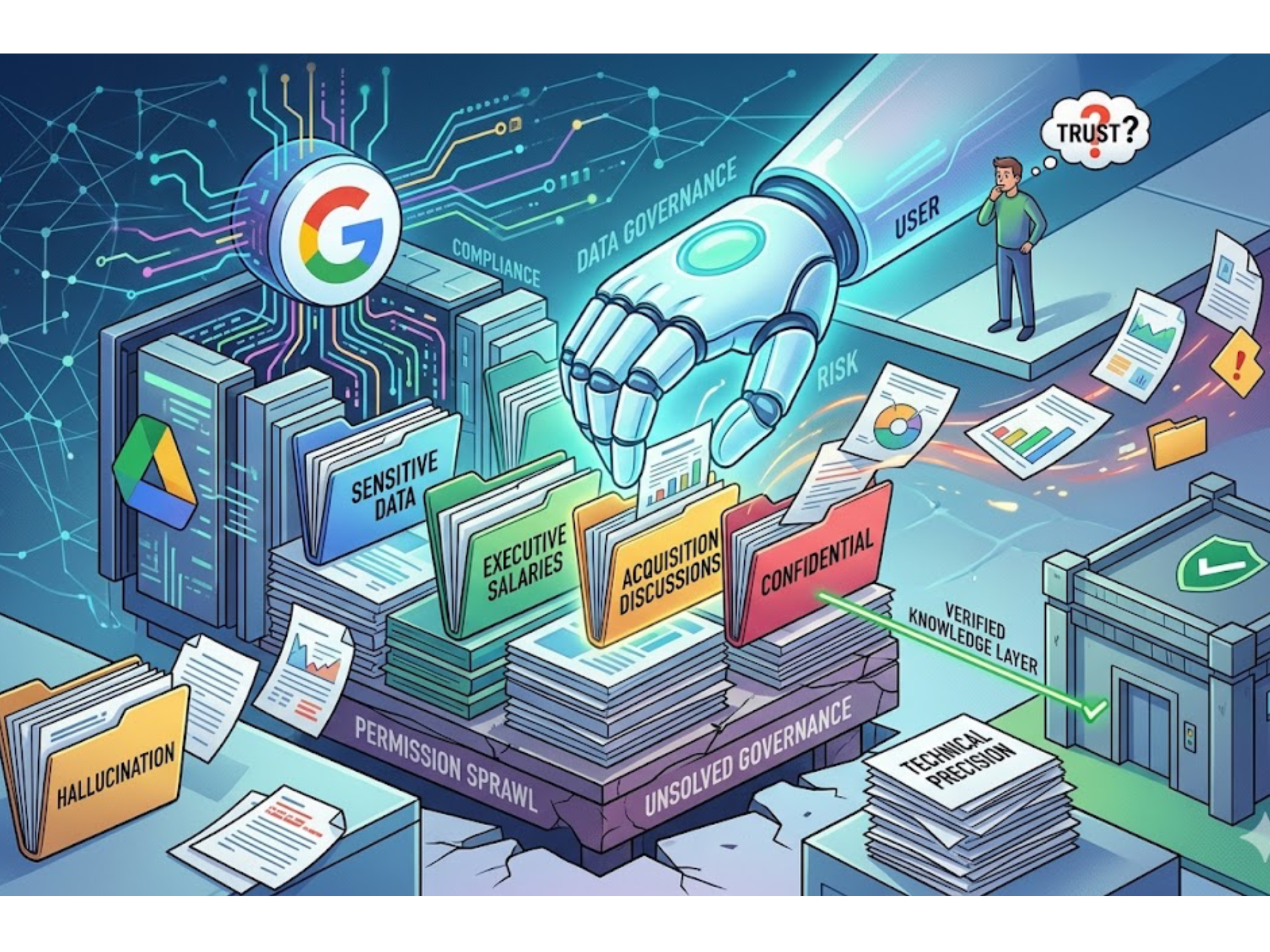
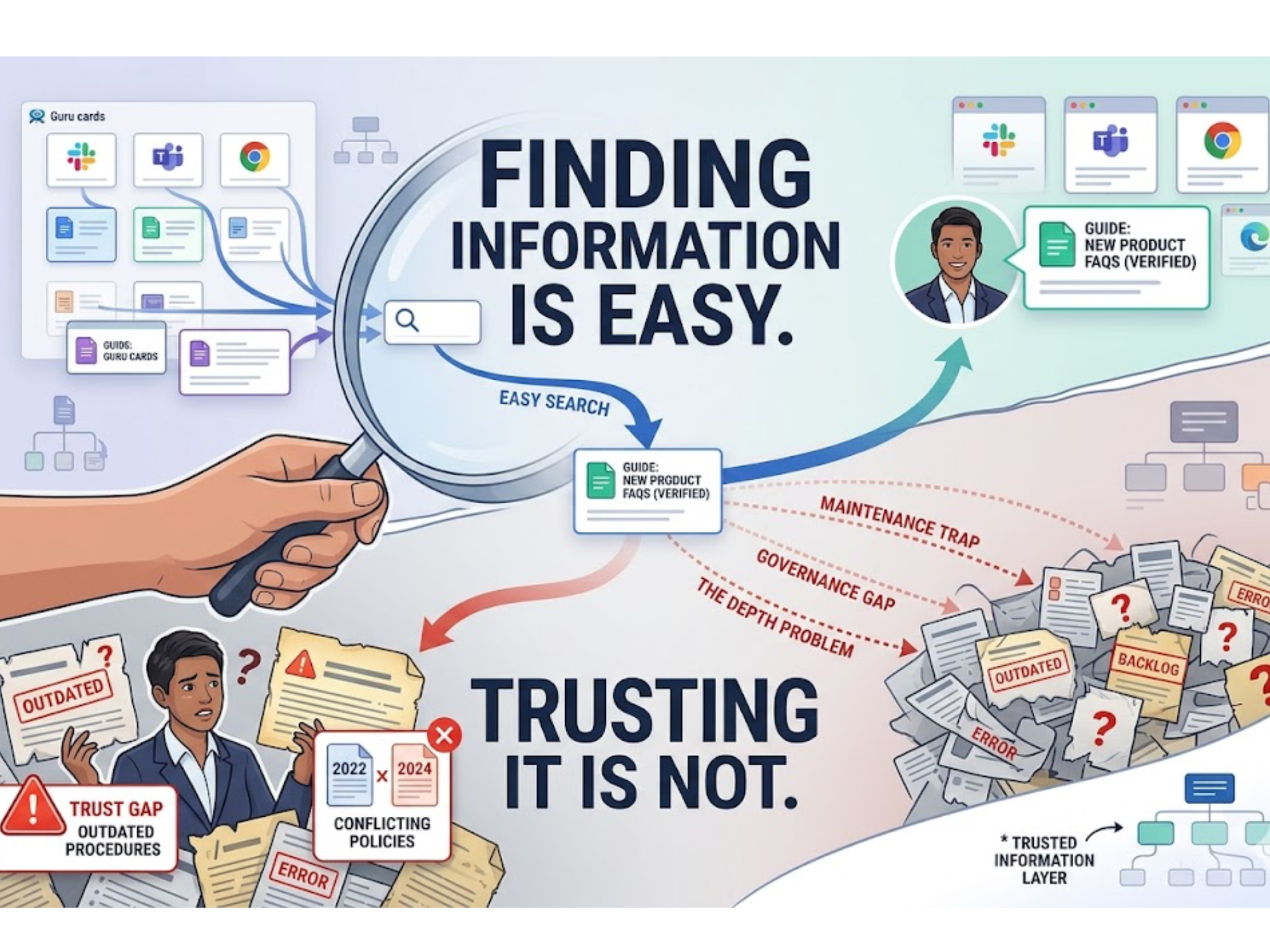
Most organizations don’t struggle with lack of information. They struggle with too much information in the wrong places, owned by the wrong people, explained in the wrong way.
So when teams drop an LLM on top of that mess, the results are predictable: fast answers, questionable accuracy, and zero trust. The issue isn’t the model, it’s the foundation.
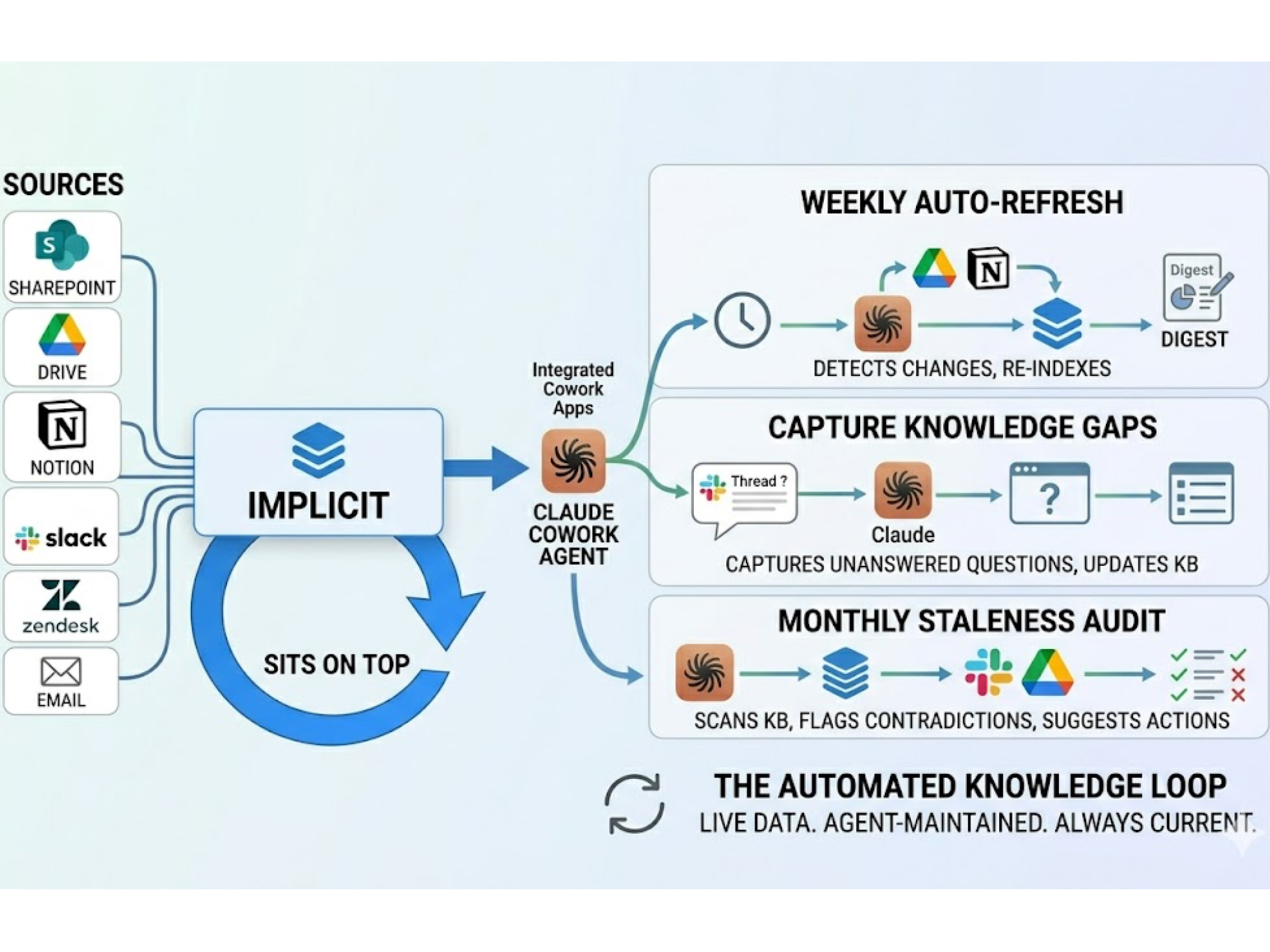
The companies getting real value from AI all start in the same place: a custom, structured knowledge base that reflects how the organization actually works. Only then do they layer AI on top as the interface.
That sequence matters far more than the model you choose.
Why a Custom Knowledge Base Is the Foundation (Not a Nice-to-Have)
A custom knowledge base is fundamentally different from a shared drive or a wiki graveyard. It’s not just where documents live, it’s how institutional knowledge is organized, maintained, and understood.
At its best, a knowledge base captures both explicit knowledge (SOPs, policies, specs) and contextual knowledge (why decisions were made, how edge cases are handled, what “good” looks like internally). That structure is what allows AI to reason accurately instead of hallucinating confidently.
Key characteristics of a strong custom knowledge base include:
- Curated source material tied to real workflows
- Clear hierarchy and logical grouping
- Domain-specific terminology and concepts
- Ownership, versioning, and update discipline
- Context alongside instructions
Without this structure, AI has nothing reliable to stand on. With it, AI becomes dramatically more useful.
Why Layering AI on Top Is a Force Multiplier
AI shouldn’t replace your documentation, but it should make it more actionable.
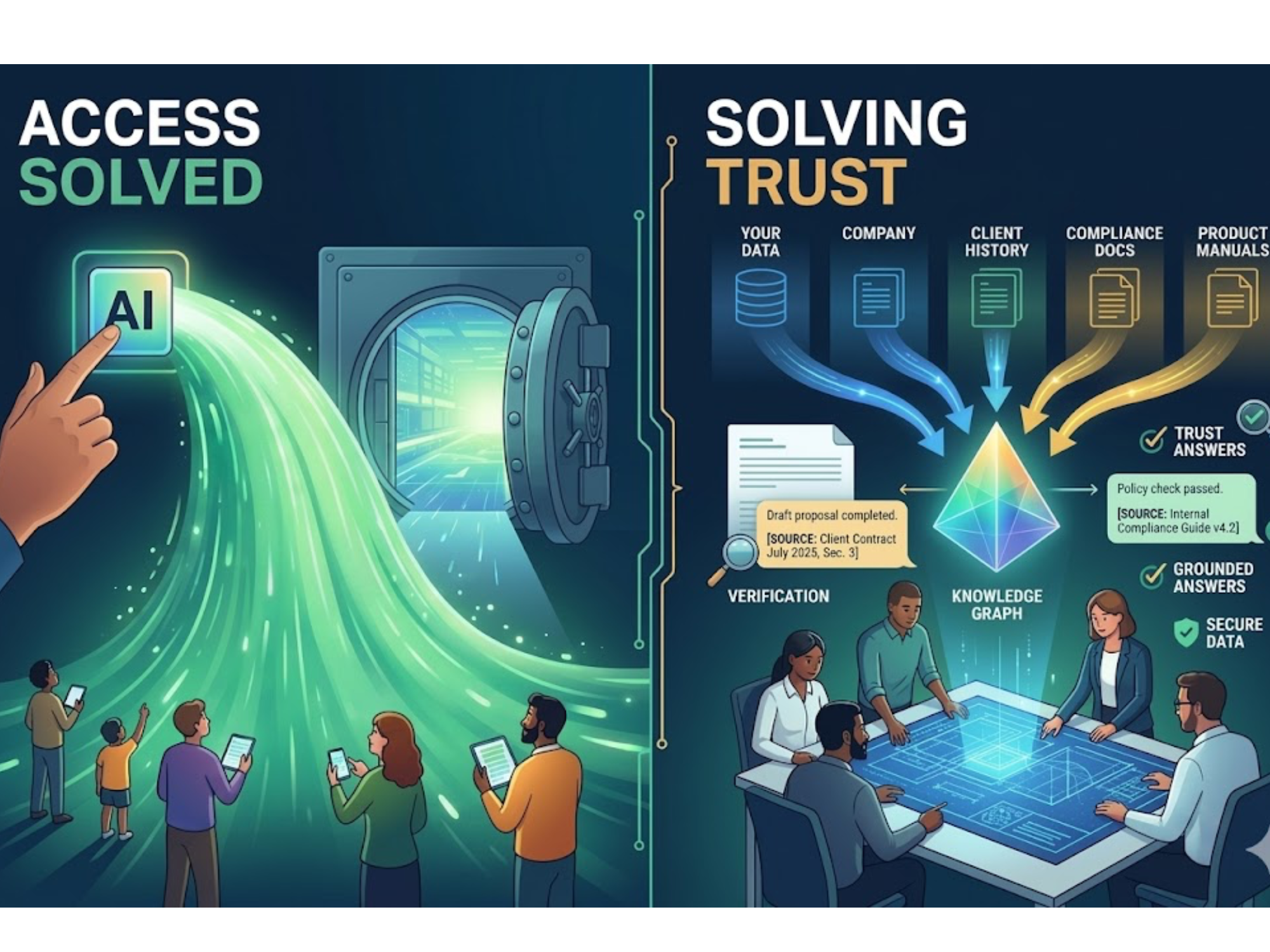
When an LLM is layered on top of a curated knowledge base, it becomes a natural-language interface to institutional knowledge. People stop hunting for documents and start asking questions. The answers they receive are grounded in approved sources and linked back to the underlying material.
This shift changes behavior across the organization:
- People trust answers because they’re sourced
- Knowledge gaps surface quickly based on unanswered or repeated questions
- Updates compound value instead of getting lost
- AI outputs stay aligned with how the business actually operates
In short, AI stops being a novelty and starts behaving like infrastructure.
Horizontal Use Cases Across the Organization
One of the biggest advantages of this approach is that the same knowledge foundation can support every team, without duplicating effort or fragmenting truth.
Customer Support: Speed Without Sacrificing Accuracy
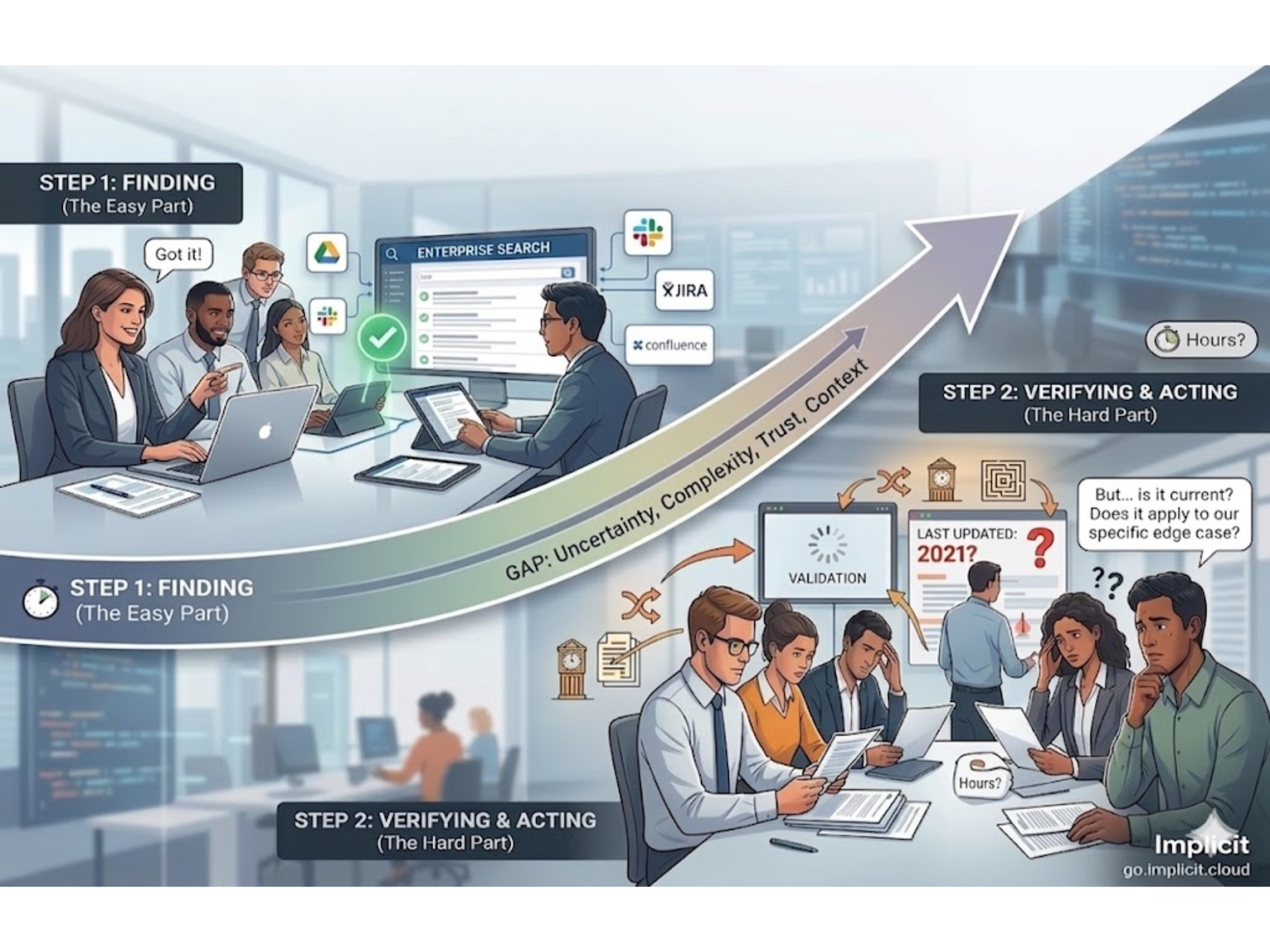
Support teams live at the intersection of urgency and correctness. A custom knowledge base layered with AI allows agents to ask real questions and receive consistent, cited answers, without relying on memory or tribal Slack threads.
Instead of scrolling through macros in tools like Zendesk or outdated articles in Intercom, agents interact directly with living documentation.
Common outcomes include:
- Faster first-response times
- Fewer escalations to engineering or product
- Easier onboarding for new agents
- Clear visibility into missing or outdated documentation
Sales & Revenue Teams: Consistency at Scale
Sales conversations break down when answers vary by rep. A knowledge-backed AI layer ensures everyone, from SDRs to AEs and VPs, pulls from the same source of truth.
Instead of chasing down product managers or sales engineers mid-call, reps can query the system in real time and respond with confidence.
This is especially valuable for:
- Pricing and packaging explanations
- Security and compliance questions
- RFP and questionnaire responses
- Competitive positioning guidance
The result is faster deals and fewer surprises downstream.
Onboarding & Training: From Static Docs to Interactive Learning
Traditional onboarding assumes people will read documentation front to back. They won’t. They ask questions.
An AI layer turns onboarding into a dialogue instead of a scavenger hunt. New hires can ask “how,” “why,” and “when” questions and get answers grounded in official materials, complete with links for deeper learning.
This leads to:
- Faster ramp times
- Less interruption for senior staff
- More consistent understanding of processes
- Better long-term knowledge retention
Documentation finally gets used instead of ignored.
Operations & Process: Reducing Bottlenecks and Knowledge Silos
Operations teams are often the unofficial knowledge hubs of the organization. That doesn’t scale.
By capturing SOPs, workflows, and edge-case handling in a structured knowledge base...and then layering AI on top...operational knowledge becomes accessible without meetings, emails, or heroics.
This approach helps:
- Standardize processes across teams
- Reduce dependency on specific individuals
- Identify process drift over time
- Support audits and retrospectives with confidence
AI can effectively distribute ops across the entire organization, consistently and at scale.
Legal, Compliance & Security: Controlled, Auditable Answers
Generic AI tools struggle in regulated environments because they optimize for fluency, not precision. A knowledge-base-first approach flips that dynamic.
By restricting AI responses to approved sources only, organizations can safely expose policy, compliance, and security guidance internally, without risking off-script answers.
Typical benefits include:
- Source-cited responses for audits
- Version-aware policy explanations
- Reduced legal and compliance escalations
- Confidence that answers align with current standards
In these teams especially, accuracy beats speed...and this model delivers both.
Why Generic AI Tools Hit a Ceiling
Horizontal tools like Notion AI, Confluence search, or even raw LLMs from OpenAI are powerful, but they’re not opinionated about your business.
They don’t know:
- Your internal language
- Your edge cases
- Your historical decisions
- Your operational constraints
A custom knowledge base supplies that missing context. The AI layer makes it usable. One without the other risks hitting a plateau.
Knowledge as Infrastructure (and AI as the Interface)
The most effective AI strategies don’t start with prompts or plugins.
They start with knowledge design.
When organizations treat knowledge as infrastructure (and AI as the interface to it) they unlock compounding returns:
- Faster decisions
- Consistent execution
- Lower operational drag
- Institutional memory that survives turnover
Or, more simply:
Build the brain first. Then give it a voice. That’s how AI becomes a competitive advantage,not just another tool in the stack.
.svg)