.svg)

Your Team Found the Document, But That's Not the Hard Part.
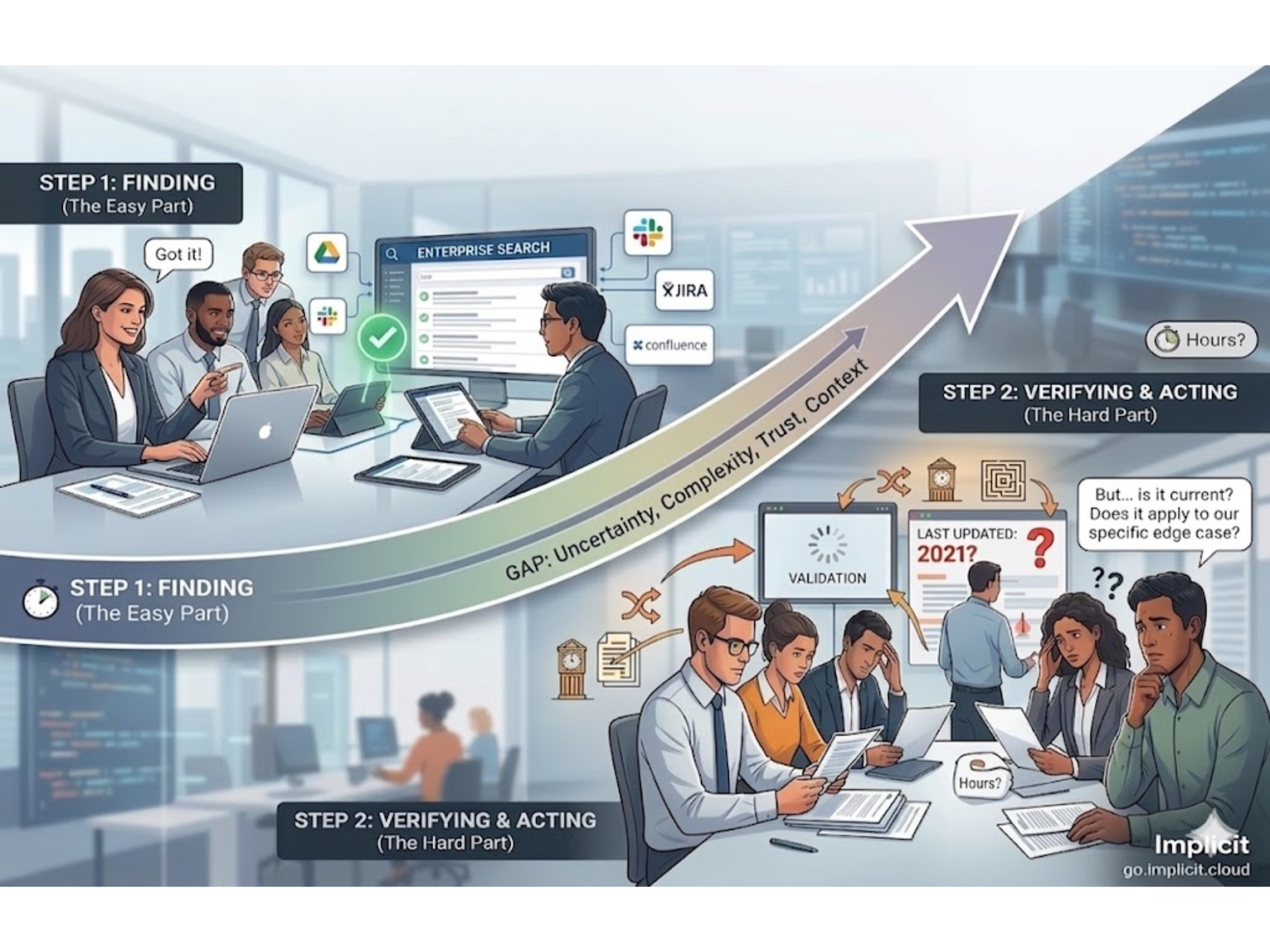
Finding information faster is valuable. Trusting it enough to act on it is something else entirely.
Enterprise search was one of the most important ideas in workplace AI. The promise was simple: connect all your tools, index everything, and give employees one place to find what they need. Glean made that promise real. With connectors to over 100 apps, a personalized AI assistant, and strong adoption across large enterprise teams, it set the bar for what unified search could look like at scale.
But as teams have settled into that workflow, a new and more stubborn problem has started surfacing. Finding information faster is valuable. Trusting it enough to act on it is something else entirely.
Enterprise Search Solved Discovery. The Next Problem Is Expertise.
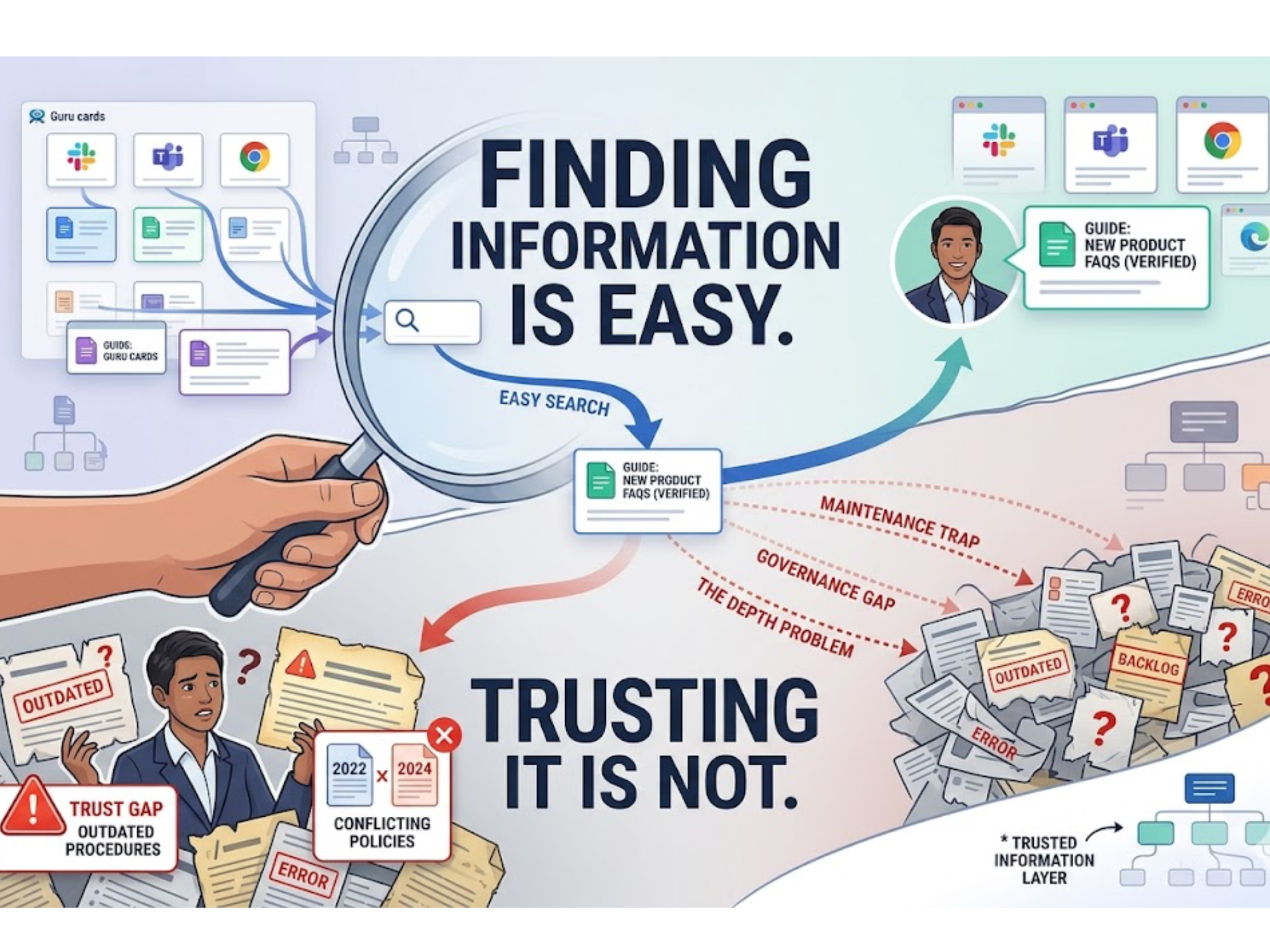
Most organizations have run into this at some point. Someone opens a ticket, searches for the relevant documentation, and finds it quickly. That part works. Then the real work begins.
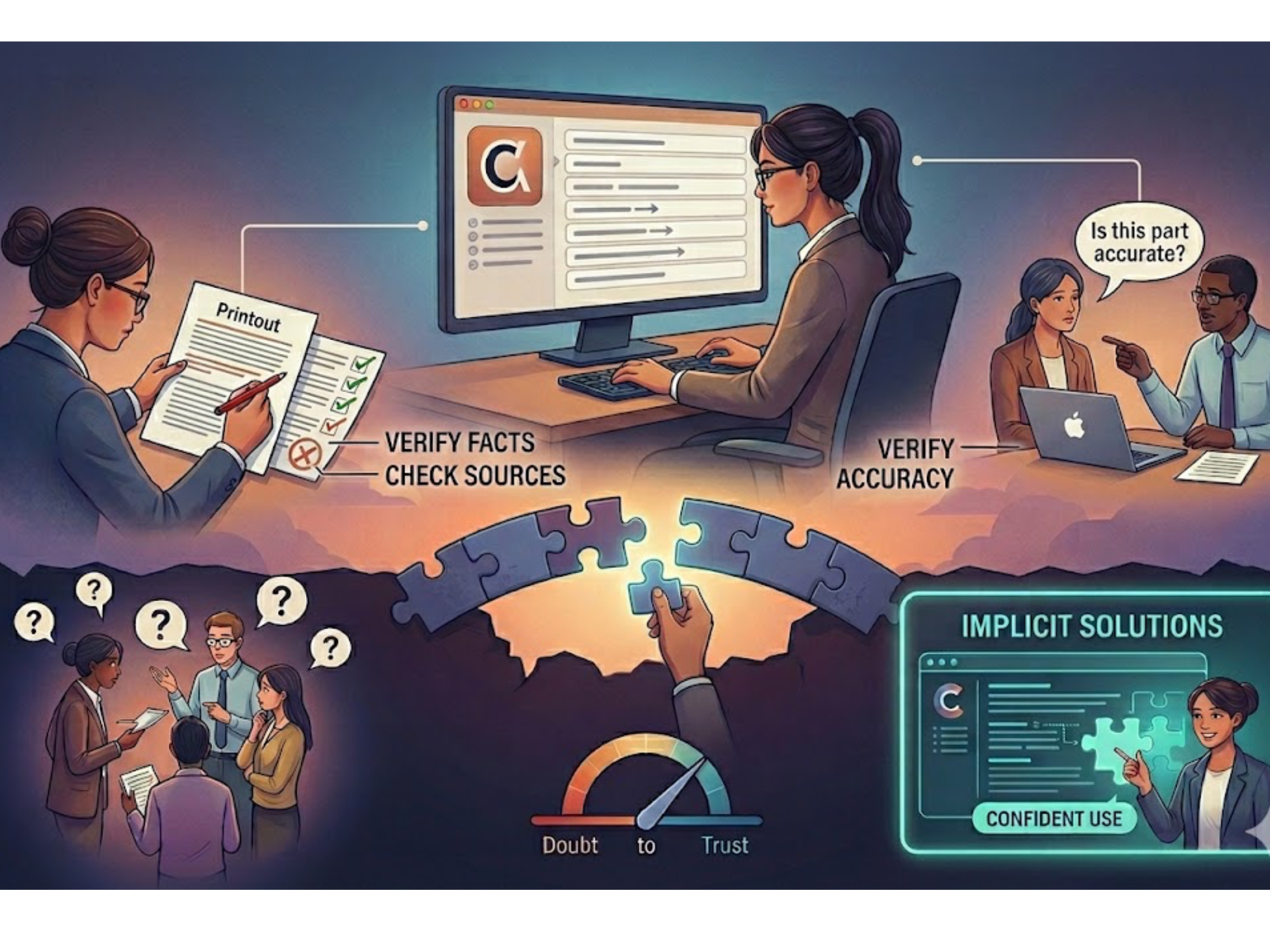
They read through it. They cross-reference two or three other sources to make sure it still applies. They try to figure out whether the procedure has been updated since this document was last touched. They look for the specific paragraph that covers their exact scenario, buried somewhere in a 200-page manual. Then they make a judgment call and hope they got it right.
The search part took seconds. Everything after it took an hour, and there is still uncertainty at the end of it.
This gap between retrieval and confidence is where productivity leaks, errors happen, and experienced employees become bottlenecks. When teams cannot trust that the answer they found is accurate, complete, and current, they stop relying on the system and start relying on each other. The institutional knowledge problem does not go away, it just moves into Slack DMs and impromptu calls.
The issue is not that enterprise search failed. It is that retrieval was always only the first step. What teams actually need is for the information they find to be immediately actionable: verified, sourced, and specific enough to act on without a second round of investigation.
A Different Kind of Knowledge Problem
This tension is especially sharp for teams working in technically complex or operationally demanding environments. Think of support engineers troubleshooting intricate product failures. Field technicians in manufacturing or logistics who need precise procedural guidance on the floor. Legal and compliance teams validating policy against a dense body of internal documentation. Operations managers in regulated industries where a wrong answer has real consequences.
The common thread is not the industry. It is the nature of the knowledge. Dense, specialized, constantly evolving documentation that lives across multiple sources, that requires context to interpret correctly, and that cannot afford to be wrong. For these teams, a list of relevant documents is a starting point, not an answer.
The question they are asking is not "where does this information live?" It is "given everything we know, what should we do right now, and what is it based on?" That is a reasoning problem, not a retrieval problem, and it requires a different kind of tool.
How Implicit Approaches Knowledge Differently
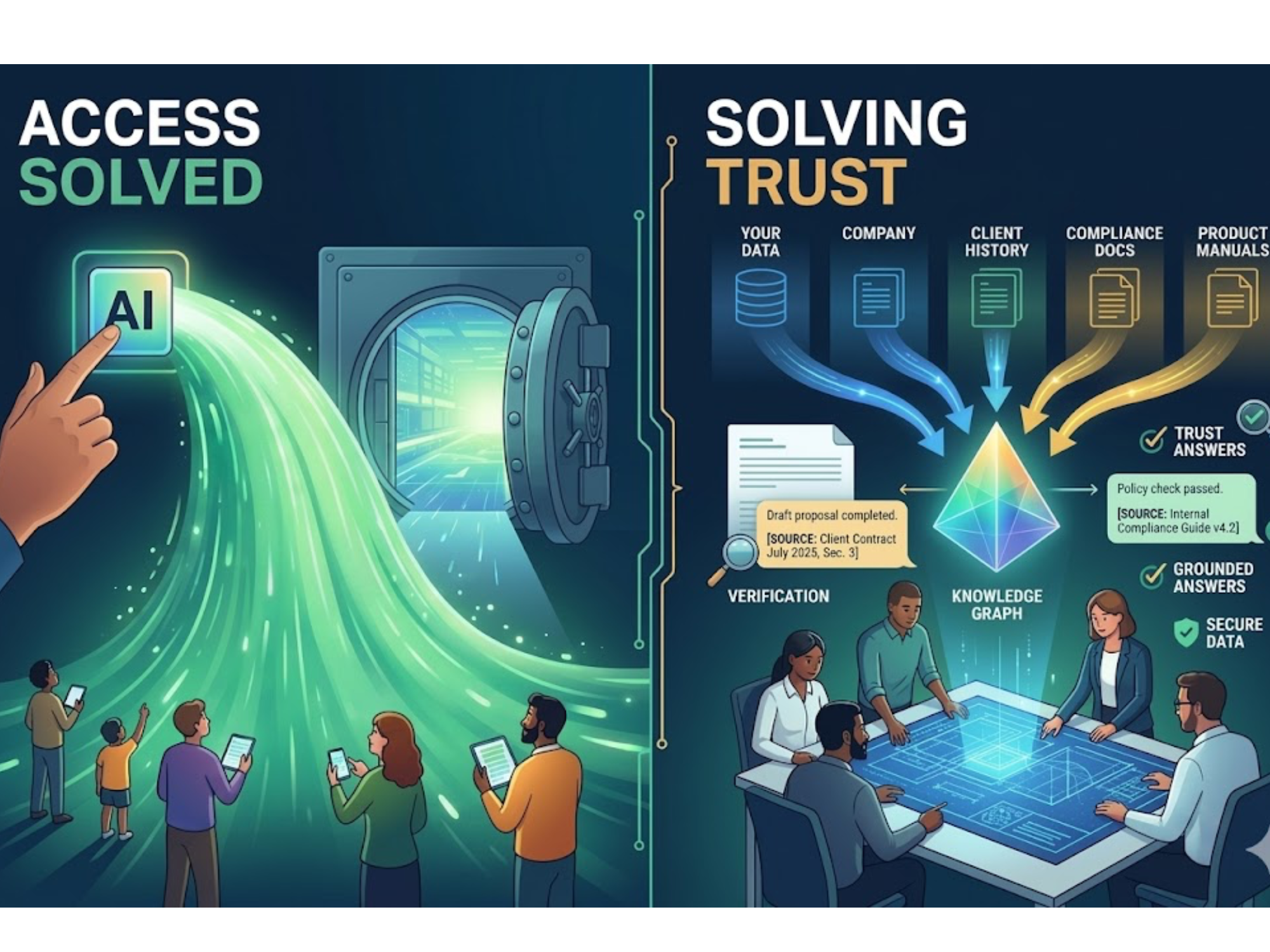
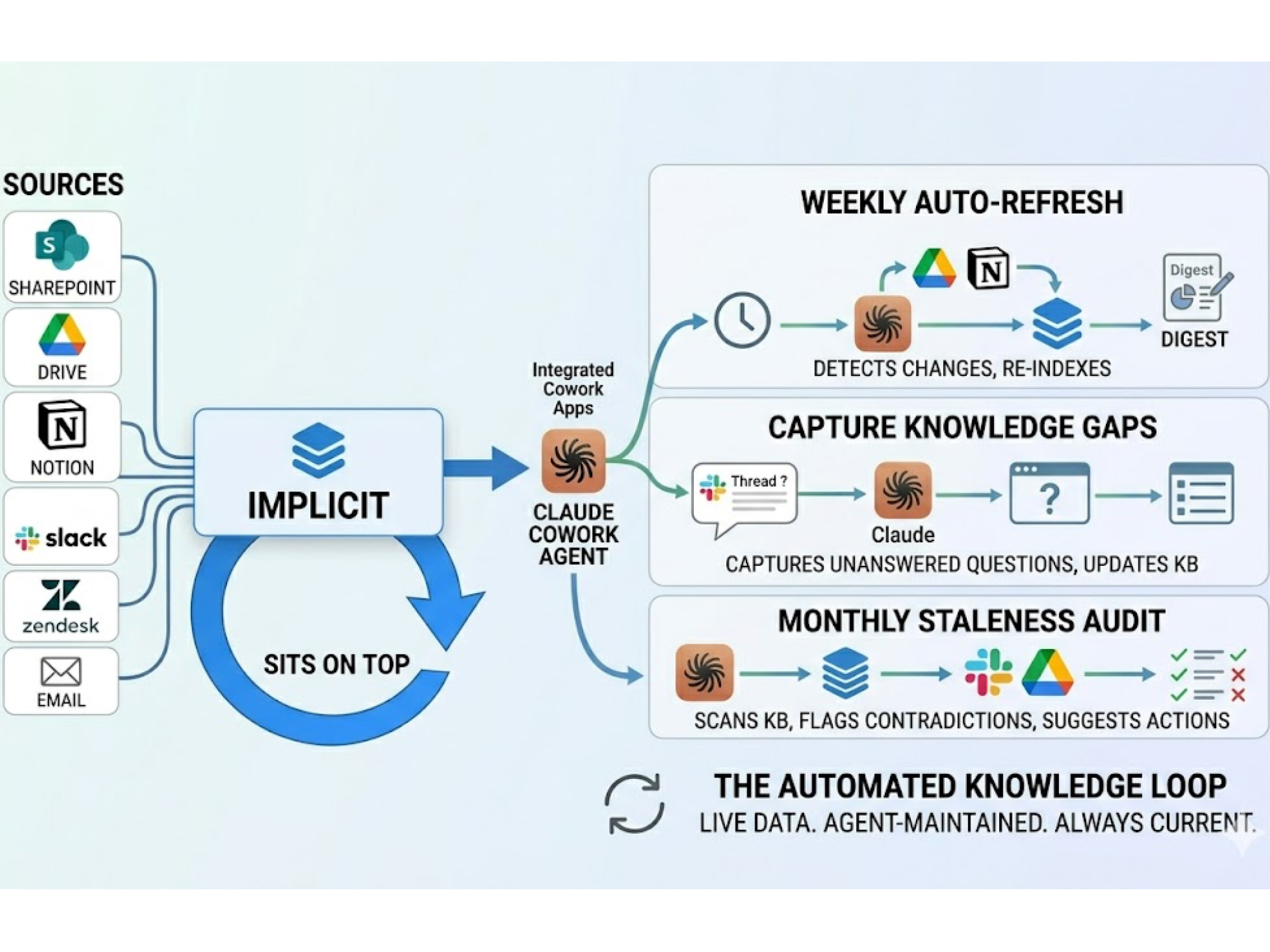
Implicit was built specifically for that gap. Rather than indexing broadly across an app ecosystem, it ingests an organization's most critical knowledge sources and builds a structured domain knowledge graph from them. Every answer it produces is traced back to the exact source it came from, so teams are not just getting an answer, they are getting an answer with a verifiable chain of reasoning behind it.
For teams in regulated or high-stakes environments, Implicit also supports compliance-grade deployment, edge and air-gapped infrastructure, and live analytics that show where a knowledge base is performing well and where it has gaps.
If you want to see how the two platforms stack up feature by feature, https://go.implicit.cloud/implicit-vs-glean covers it in depth.
Two Tools, Two Jobs
The market for enterprise AI is maturing quickly. The first wave was about connecting everything and making information findable. The next wave is about making that information genuinely useful at the moment it matters most. That shift is already underway, and the teams navigating it best are the ones who know which tool is right for which job.
.svg)